
This isn’t just peak season. It’s when the real decisions get made.
Homeowners aren’t casually looking around for a remodeler at this point. They’re deep in researching, comparing, and double-checking what they’re seeing. By the time they contact someone, they usually already have a short list in mind, shaped by search, reviews, and now AI tools too.
How can remodelers win more jobs during the busy season?
Remodelers win more jobs by simplifying decisions for homeowners—focusing on clear value, structured options, predictable timelines, and system-level solutions rather than just product features. It’s about making the decision process easier to understand, to trust, and to act on.
During peak remodeling season, contractors who focus on clarity, value, and process are more likely to convert leads into signed projects.
 1.How Remodelers Earn More Business by Leading with Value, Not Price
By the time a homeowner is in the product conversation, they have already seen the features and compared the materials. In many cases, they have already been exposed to a dozen versions of the same claim.
The question is no longer, “What does this product offer?” It is, “Why does this project make sense to do now, and why with you?”
Remodelers can use ROI to do 4 things at once:
- Justify the investment
- Create separation from lower-price bids
- Keep the conversation anchored in outcomes (not line items)
- Move the homeowner from comparison mode into decision mode
If the conversation starts too deep in specs, the remodeler can end up doing exactly what the homeowner is already doing online: comparing attributes. And attribute battles are hard to win.
A better approach is to build the recommendation around economic logic.
- How does this upgrade improve comfort in a way the homeowner will notice?
- How does it reduce the chance of future issues, replacement, or disappointment?
- How does it strengthen the overall value of the home?
- And how does it compare to a cheaper option that may solve the immediate problem but create trade-offs later?
Key takeaway: Homeowners choose the contractor who clearly connects the project to long-term value, not just upfront cost.
 2. Why Simplifying Your Offering Leads to More Signed Remodeling Jobs
On paper, a broader building products assortment can look like a selling advantage. In practice, too many options often make the decision harder, especially when homeowners are already trying to compare quotes, timelines, product claims, and long-term value across multiple bids. There’s an operational cost on the back end, too. More configurations mean more room for quoting inconsistencies, ordering errors, scheduling friction, and installation variability. In peak season, that complexity can carry all the way through fulfillment and start eating into margin.
In short, too many choices can slow down homeowner decisions and reduce close rates during the busy remodeling season.
That means leading with a narrower set of proven options, structuring proposals in clear, comparable tiers, and guiding the homeowner toward the right fit based on priorities.
Key takeaway: The remodelers who move fast during busy season usually are not the ones showing every possible option, but those who are running a tighter process that helps customers make confident decisions.
 3. How Transparent Timelines Help Contractors Secure More Jobs
Homeowners will ask, “How long is this going to take?” But what they’re really evaluating is how much uncertainty they’re about to take on. They’ve seen delays and heard stories about missed shipments, back-ordered materials, and jobs that dragged on longer than expected. When they evaluate proposals, they compare both the product scope and how controlled the process feels.
Timelines that sound conditional, open-ended, or overly optimistic can create friction. Not always enough to end the deal outright, but enough to slow decisions, invite more comparisons, and push the homeowner to keep shopping.
Remodelers that outperform in this area turn timelines into operational discussions:
- They break the project into defined phases and anchor each one with clear expectations, not just start and end dates.
- They call out dependencies early: material availability, scheduling windows, and site readiness.
- They don’t avoid variables—they surface them and show how they’re managed.
They also position reliability as a function of their system:
- Repeatable install processes
- Known lead times from trusted suppliers
- Consistent crew scheduling
- Clear handoffs between sales, ops, and install
That reframes the conversation from “How fast can you do it?” to “How reliably can you deliver it?”
Key takeaway: Remodelers who clearly explain timelines and dependencies reduce uncertainty and build trust faster.
 4. How to Make Product Value Easy for Homeowners to Understand
Homeowners are showing up with more information now. They’ve read the comparison articles, looked at product pages, and increasingly, they’ve run their questions through AI tools that summarize options and surface key specs. In some cases, they’re repeating spec language back to you. But that doesn’t automatically mean they understand how to evaluate what matters, or how one option is going to perform in the context of their house, priorities, and budget. So instead of leading with spec terminology, translate it into consequence.
Thermal performance becomes a comfort conversation. Durability becomes a life-cycle discussion. Structural performance becomes a chat about long-term fit, function, and how windows and siding, hold up over time.
Key takeaway: Many homeowners research products online or through AI tools, but still need help understanding what matters most for their specific project. Translating technical specs into real-world outcomes helps homeowners make faster, more confident decisions.

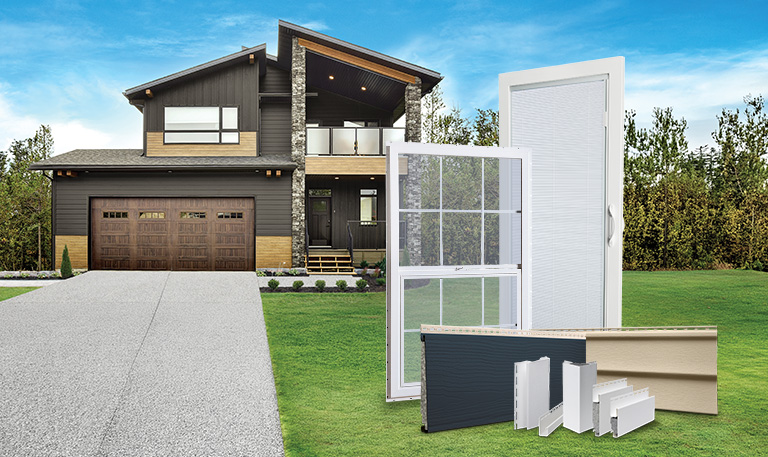
 5. Why Selling a Complete Exterior System Helps Remodelers Win More Jobs
Homeowners may ask about windows first, but that does not mean they are evaluating the project one component at a time.
They are thinking about comfort, energy performance, appearance, maintenance, and overall value. In other words, they are judging the outcome of the complete exterior.
That’s why framing the recommendation at the system level is a strong approach.
It means showing how the pieces line up, e.g., how windows interface with doors; how siding, trim, and accessories integrate; and how the broader building envelope all comes together.
And it’s about how those choices affect thermal performance, durability, moisture management, and curb appeal; and why a more coordinated approach often produces a better long-term result than a one-off replacement mindset.
System-level selling creates a clearer project story, helps justify investment beyond first-cost comparisons, and gives sales a way to close the door to commodity pricing and start a new conversation.
Key takeaway: Homeowners evaluate the full project outcome, not individual products. System-level recommendations strengthen both value and differentiation.
What Homeowners Are Asking Right Now
Winning more jobs during a busy construction and remodeling season means paying more attention to the questions driving decisions:
- What upgrades deliver the best ROI for homeowners?
- How long does a typical remodeling project take?
- Which materials last the longest?
- Why do contractor quotes vary so much?
Bring structure to the conversation. Connect features to financial logic. Eliminate uncertainty where you can.
When demand is up, competition is too. The advantage goes to those who replace doubt with direction.
Key Takeaways for Remodelers:
- Focus on value, not just product features
- Simplify choices to speed up decisions
- Be transparent about timelines and process
- Translate technical specs into real-world benefits
- Position projects as complete systems, not individual products