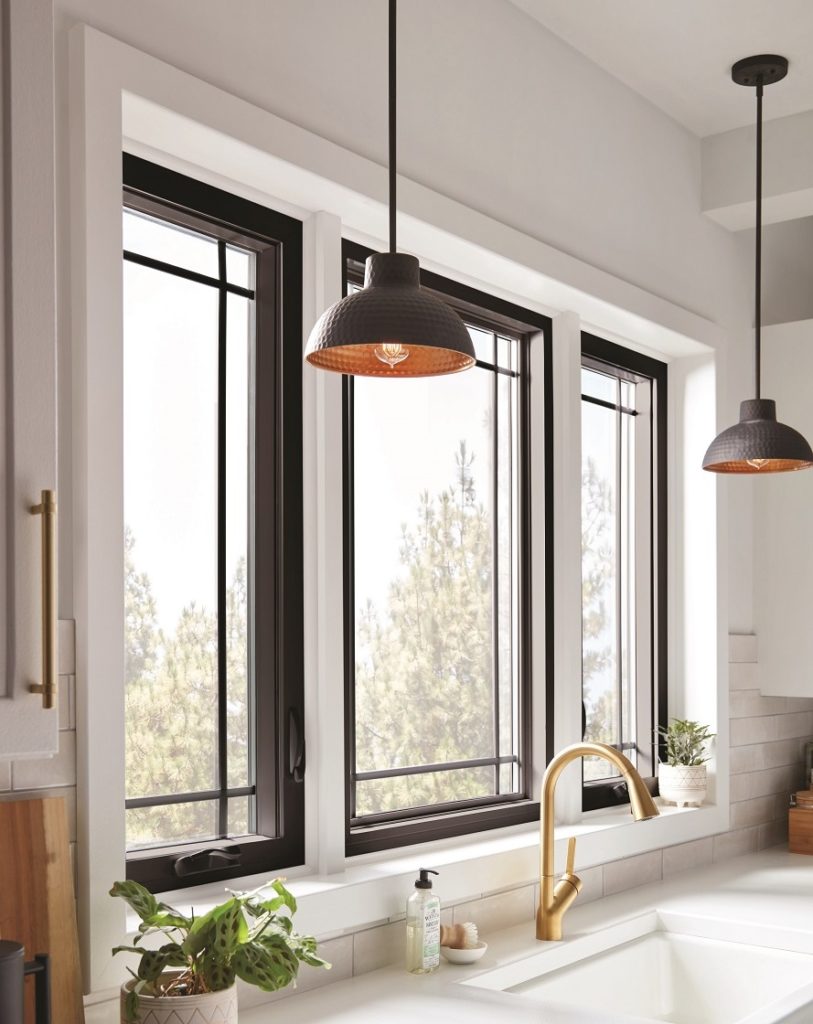
Homeowners often know the look they want, but they may not know how different window styles operate, where each works best, or what trade-offs to consider.
For remodelers, and contractors, the goal is to help homeowners match each option to the room, view, airflow, exterior design, and the way they want the home to feel.
Start with these questions:
What room is this window going in?
- Is the priority ventilation, natural light, view, curb appeal, or easy operation?
- Are we replacing an existing window, changing the style, or installing new?
- Does the homeowner want a simple solution or a stronger design statement?
From there, window style becomes easier to explain.
Casement Windows
Casement windows are hinged on the side and open outward, usually with a crank or operator. Because the sash swings open, they can provide strong ventilation. Casement windows also have a clean, streamlined appearance, since they do not have a meeting rail through the center like a double-hung window. That helps preserve more open glass area and a clearer, open view.
- Fit for: Rooms where homeowners want to catch breezes or open the window more fully. They suit kitchens, bathrooms, bedrooms, and areas where reaching or lifting a sash may be less convenient.
- When discussing: Position casement windows around ventilation, view, and ease of operation, especially in places where a homeowner wants fresh air.
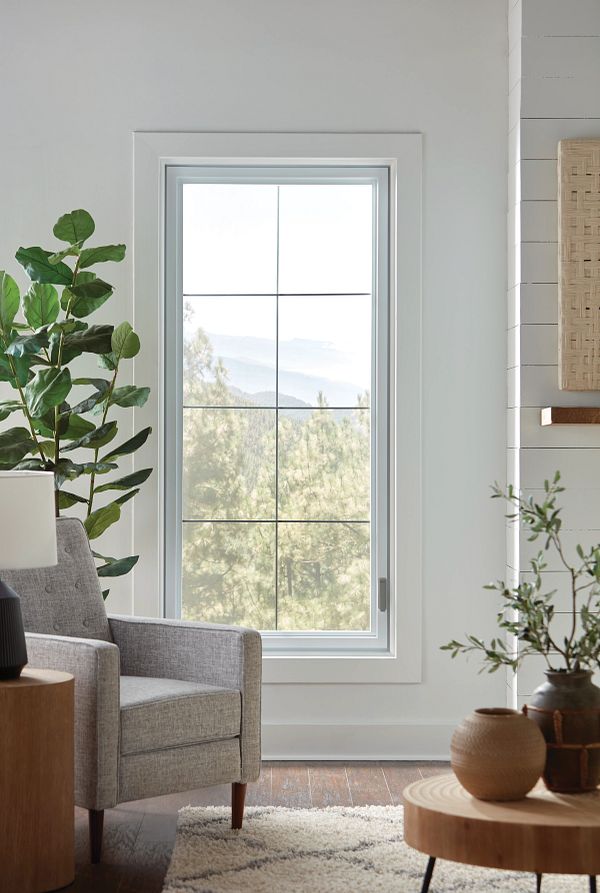
Gentek® casement windows(opens in new tab) combine clean looks with easy operation.
Awning Windows
Awning windows are hinged at the top and open outward from the bottom, allowing the sash to create a small “awning” effect when open. They are often wider than they are tall, which can make them ideal for rooms where wall space or placement is more limited.
- Fit for: Bathrooms, basements, kitchens, or higher wall placements. They can also be paired with larger fixed windows to add ventilation without interrupting the main view.
- When discussing: Keep the focus on controlled ventilation and smart placement.
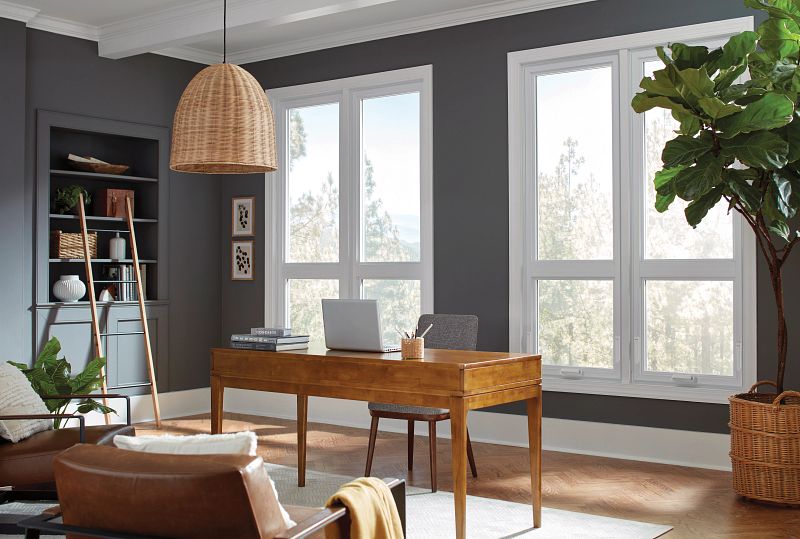
Gentek® awning windows(opens in new tab) offer a streamlined style with ample views.
Double-Hung Windows
Double-hung windows are one of the most recognizable designs, offering a classic look that works across many home styles from traditional to transitional. They have two sashes, and both the upper and lower sash can move up and down, so homeowners can open one or both, depending on the ventilation they want.
- Fit for: Bedrooms, living rooms, dining rooms, and many common replacement applications. They are a strong choice when the goal is to refresh the home’s appearance while keeping a familiar, traditional look.
- When discussing: Focus on everyday usability. Double-hung windows offer a balanced combination of ventilation, appearance, and practicality, and many people also appreciate how the design can support easier cleaning.
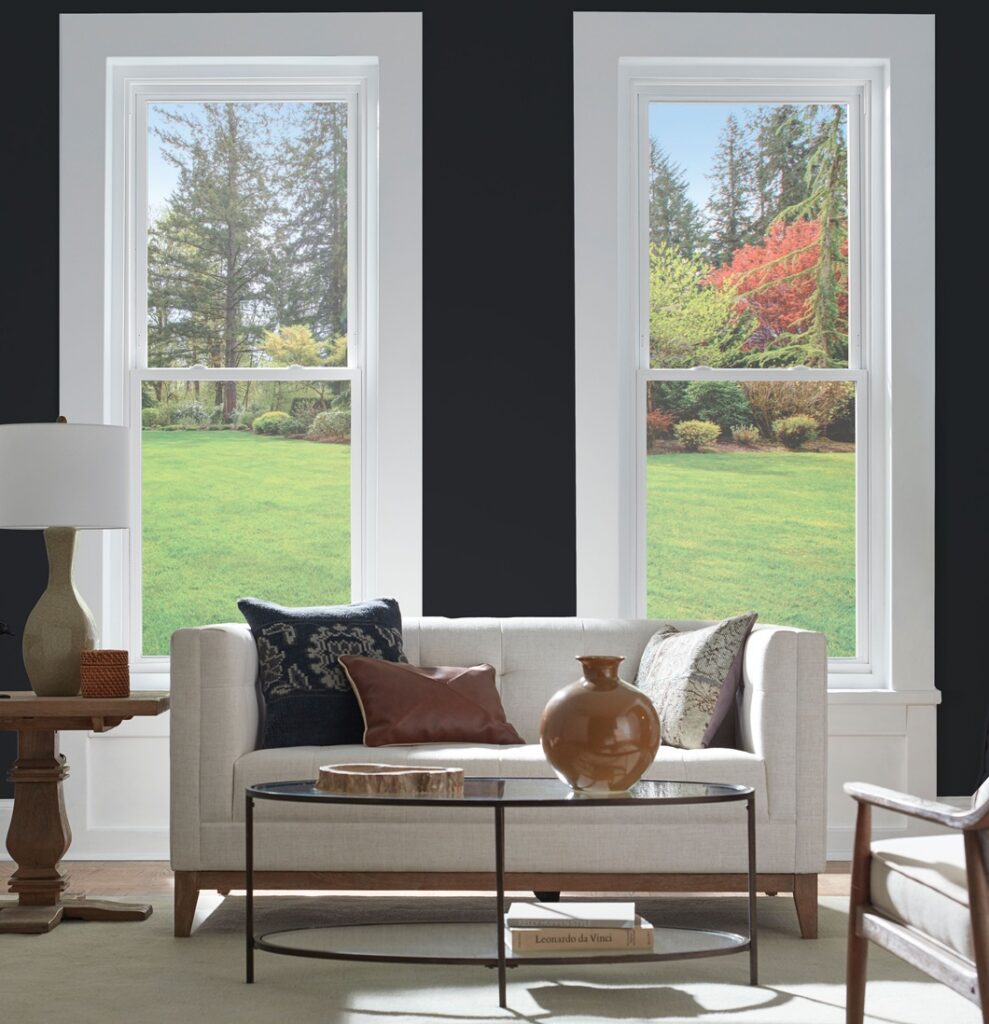
Sliding Windows
Sliding windows, also called sliders, open horizontally as one sash glides side to side along a track. For homeowners, they are easy to understand because the operation is straightforward: slide open, slide closed.
- Fit for: Sliding windows are often a practical choice for wider openings, ranch-style homes, basements, patios, or rooms where a horizontal shape works better with the wall layout. They can also be useful in areas where an outward-opening window may not be ideal because of walkways, landscaping, or exterior clearance.
- When discussing: Emphasize simplicity, horizontal design, and efficient operation.
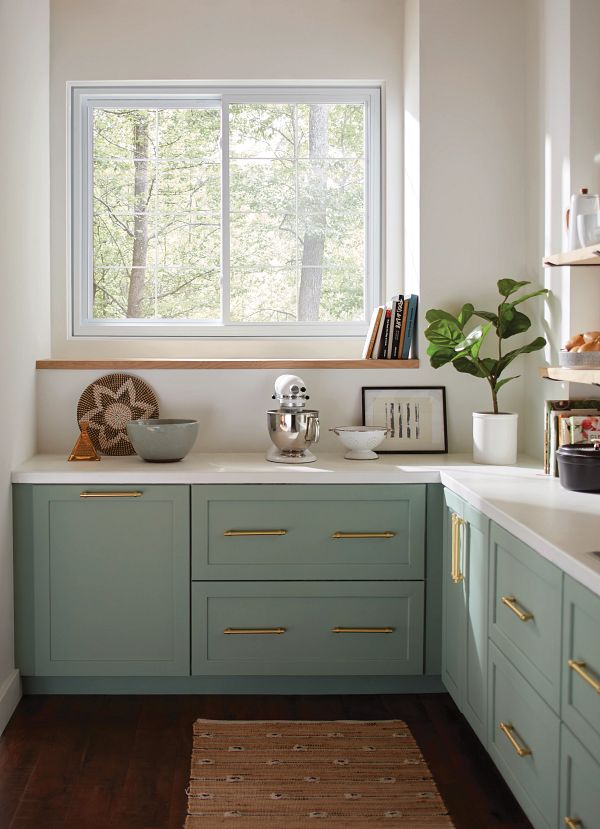
Gentek® sliding windows(opens in new tab) offer simple side-to-side operation.
Bay and Bow Windows
Bay and bow windows both project outward from the home, but they create different looks.
A bay window typically uses three window units: a larger center window with two angled side windows. A bow window usually includes multiple window units arranged in a more gradual curve.
Both styles can add dimension to the exterior and create a more open feeling inside the room. Homeowners often like bay and bow windows because they bring in more natural light, expand the view and create a focal point from both inside and outside the home.
- Fit for: Living rooms, dining rooms, front rooms, or areas where the homeowner wants to make a design statement. They can also create a small interior ledge or seating opportunity, depending on the design and installation.
- When discussing: Keep it simple by explaining how bay windows tend to feel more angular and defined, while bow windows tend to feel softer and more curved.
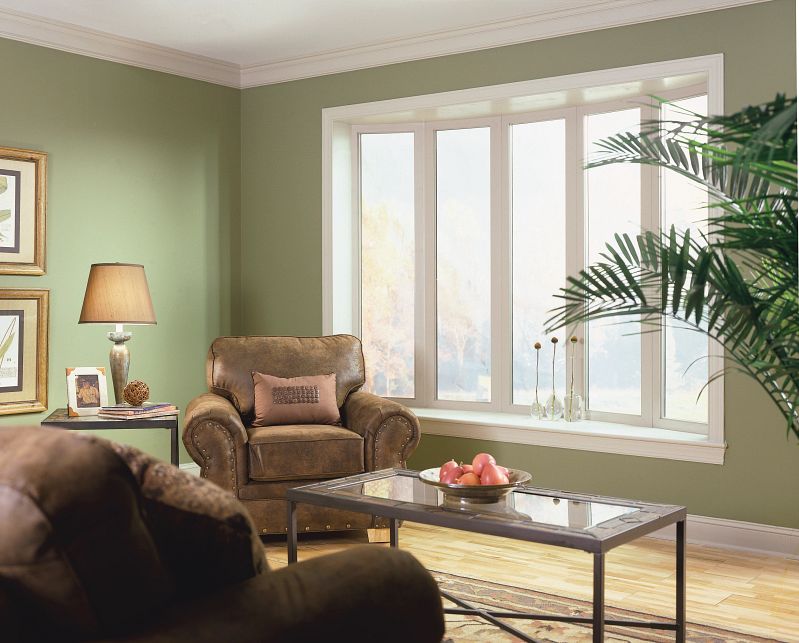
Gentek® bay and bow windows(opens in new tab) expand the view and add architectural dimension.
Picture Windows and Specialty Shapes
Picture windows are fixed windows, meaning they do not open. Their primary purpose is to bring in natural light and frame the view. They can also be paired with operable windows—for example, a homeowner may choose a large picture window in the center with casement, double-hung, or awning windows on either side for ventilation.
Specialty-shape windows include non-rectangular shapes such as arches, circles, half-rounds, triangles, and other custom-looking forms.
- Fit for: Living rooms, stairways, vaulted spaces, front elevations, and areas where a clean, uninterrupted glass area is preferred. Specialty shapes can add visual character, match an architectural detail, or create a distinctive exterior look practically anywhere.
- When discussing: With picture windows, make sure homeowners understand the trade-off—more view and light, but no direct airflow. Specialty-shapes are a good topic when homeowners care about softening a roofline, accenting a gable, enhancing an entry area, or bringing more interest to a large wall.
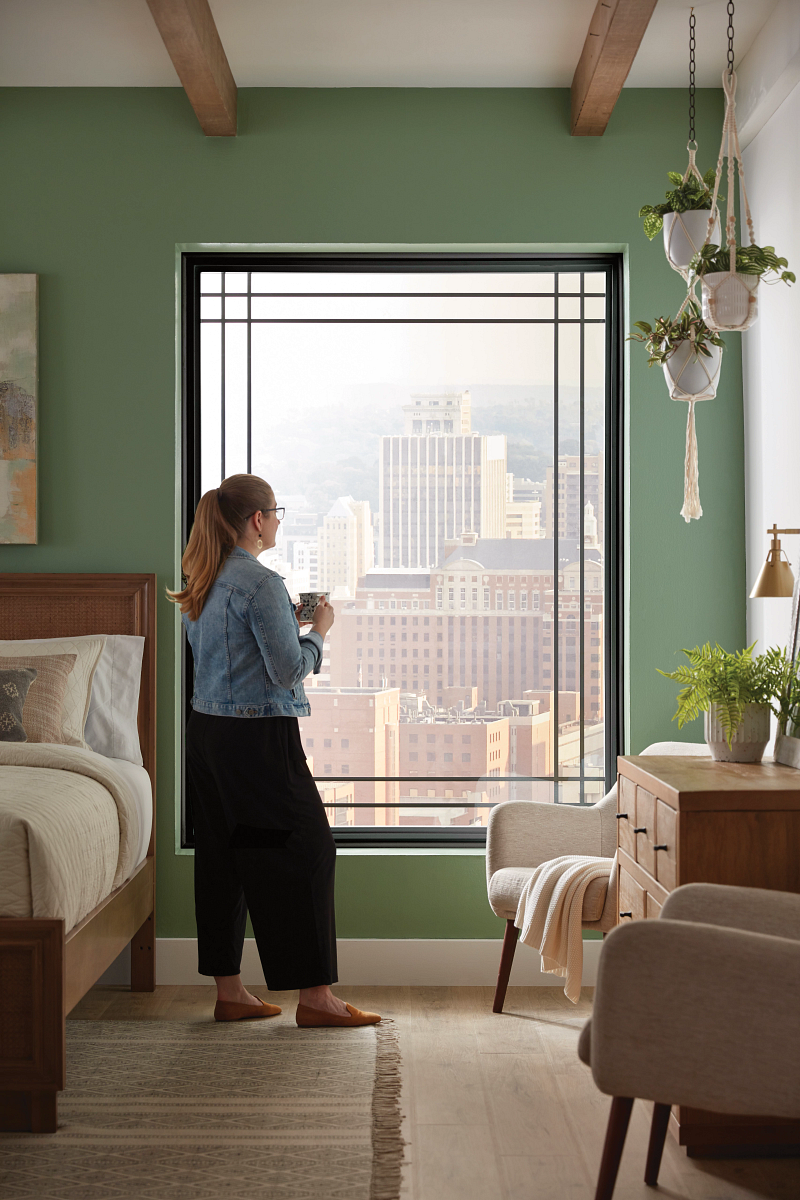
Gentek® picture windows(opens in new tab) and specialty shapes inspire creativity and excitement in transforming homes.
Helping Homeowners Decide
A homeowner may ask, “What type of window should I choose?” A better starting point is, “What do you need this window to do?”
- If they want airflow, talk about double-hung, casement, awning, or sliding windows.
- If they want a better view, talk about picture windows, casements, or larger window combinations.
- If they want curb appeal, talk about bay, bow, or specialty-shape windows.
- If they want simplicity, start with double-hung or sliding windows.
- If they want character, explore specialty shapes or window groupings.
The strongest recommendation connects the style to the room, the opening, the homeowner’s priorities, and the final look they want to achieve.
AMI offers a broad window portfolio for different project needs, including replacement and new construction applications. Style, feature, and configuration availability can vary by product line and market, so always confirm current product information before making a recommendation.
Ready to compare window styles for your next project? Explore the entire Gentek Window Collection(opens in new tab).